How high, how far
Four official heights, and a million-mile journey
Ask how high Hubble flies, or how far Webb travelled, and official NASA pages will not give you one number. They give several, written for different pages, in different units. This desk does not average them.
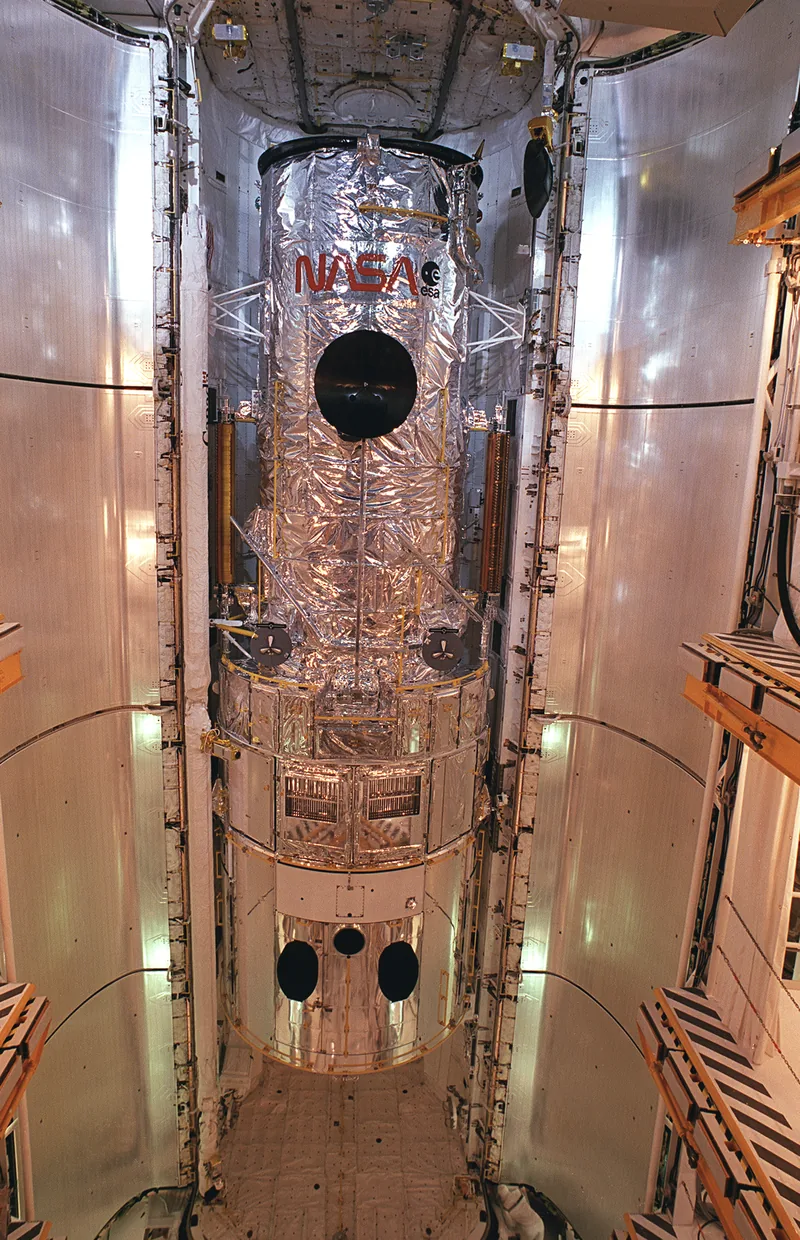
Hubble’s height, as official pages write it
The observatory page says Hubble “orbits roughly 300 miles (483 km) above Earth’s surface.”[source]
A photograph on the deployment page, taken by the STS-31 crew on 25 April 1990, shows the telescope “suspended above shuttle Discovery's cargo bay 332 nautical miles above Earth.”[source]
A facts box on the same deployment page says Hubble was deployed in a “380-statute-mile orbit.”[source]
The Webb fact sheet, writing about Hubble rather than about Webb, says “Hubble orbits 560 kilometers above the Earth.”[source]
Miles, nautical miles, statute miles, kilometres. Roughly 300, 332, 380, 560. They sit beside one another here, each attached to the sentence that wrote them.
Fifteen times a day
Height is only one official measure of the orbit. “It completes 15 orbits per day, circling Earth approximately once every 95 minutes,” the observatory page says. “The observatory moves at a speed of about five miles (8 km) per second, fast enough to travel across the United States in about 10 minutes.”[source]
The deployment mission itself is given its own figures: “Number of Orbits: 80” and “Miles traveled: 2.1 million” on that page’s quick facts.[source]
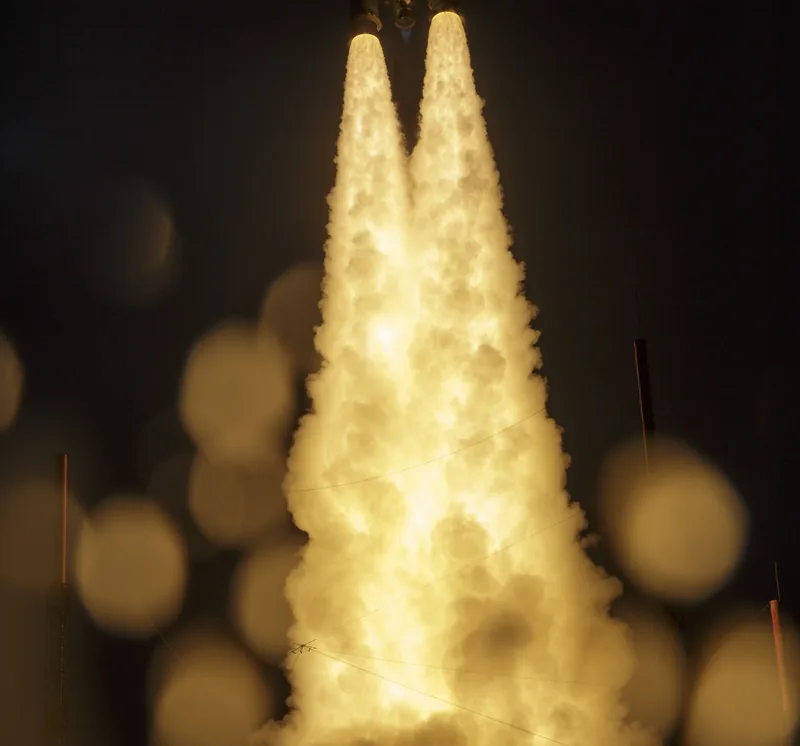
Webb’s distance, as official pages write it
Webb did not stay in low Earth orbit. The launch page says that after launch, “the telescope deployed on its 29-day, million-mile journey out to the second Lagrange point (L2).”[source]
The fact sheet’s key facts put the same neighbourhood in kilometres: “1.5 Million km from Earth,” and, later, “Orbit 1.5 million km from Earth orbiting the L2 Point.” In brackets on that key-facts line, it adds: “Hubble orbits 560 kilometers above the Earth.”[source]
Other official Webb wording uses both units together, “1.5 million kilometers (1 million miles).” This site does not fold the launch page’s “million-mile journey” and the fact sheet’s “1.5 million km” into a single converted figure.[source][source]
The FAQs add a useful caution about the destination. The L2 point “lies outside Earth's orbit while it is going around the Sun, keeping all three in a line at all times.” But “the Webb Observatory will not reside precisely at the L2 point but will slowly rotate around it twice per year in a loop that is even bigger than the Moon’s orbit around the Earth.”[source] All major deployments, the same FAQs say, were completed on 8 January 2022.[source]
Enjoyed this space-telescope desk?
No pop-ups. No intrusive advertising. Just interesting stuff. A little support helps the next galaxies.im site get built.