Discoveries
Sixteen official stories
Each of these is taken from an official NASA page, or from a dated NASA photograph on this site. Where official wording disagrees, both versions are kept.
Launched on the 24th, opened on the 25th
NASA’s observatory page says Hubble was launched on 24 April 1990 aboard Discovery. The deployment page gives the official time, 8:33:51 a.m. EDT, and says the crew deployed the telescope the next day, 25 April 1990. Official pages keep the two days apart; so does this site.[source][source]
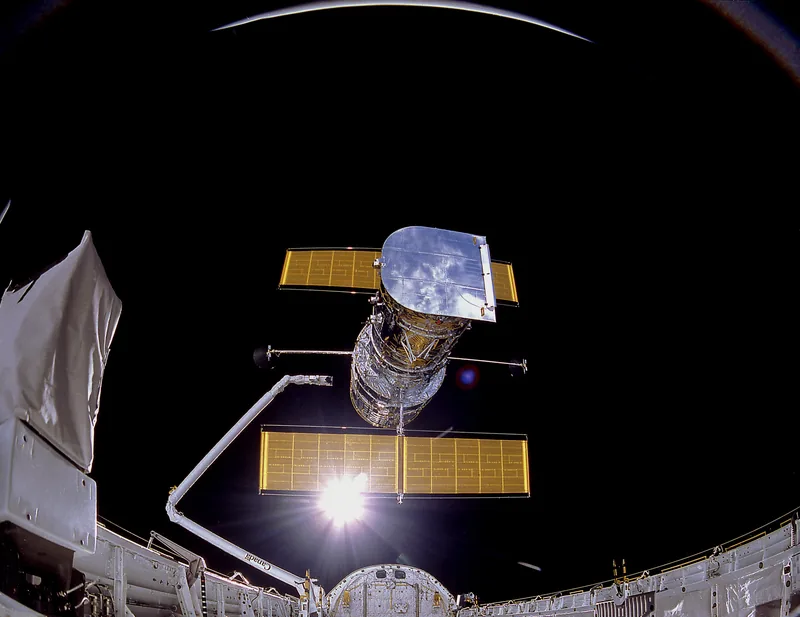
A school bus, or a railroad tank car
When it launched, “Hubble weighed some 24,000 pounds (10,866 kg).” The deployment page says it was “roughly the size of a railroad tank car or a school bus,” and “43 feet (13.1 m) long and 14 feet (4.3 m) in diameter at its widest point.” The original solar arrays “are actually roller blinds.”[source]
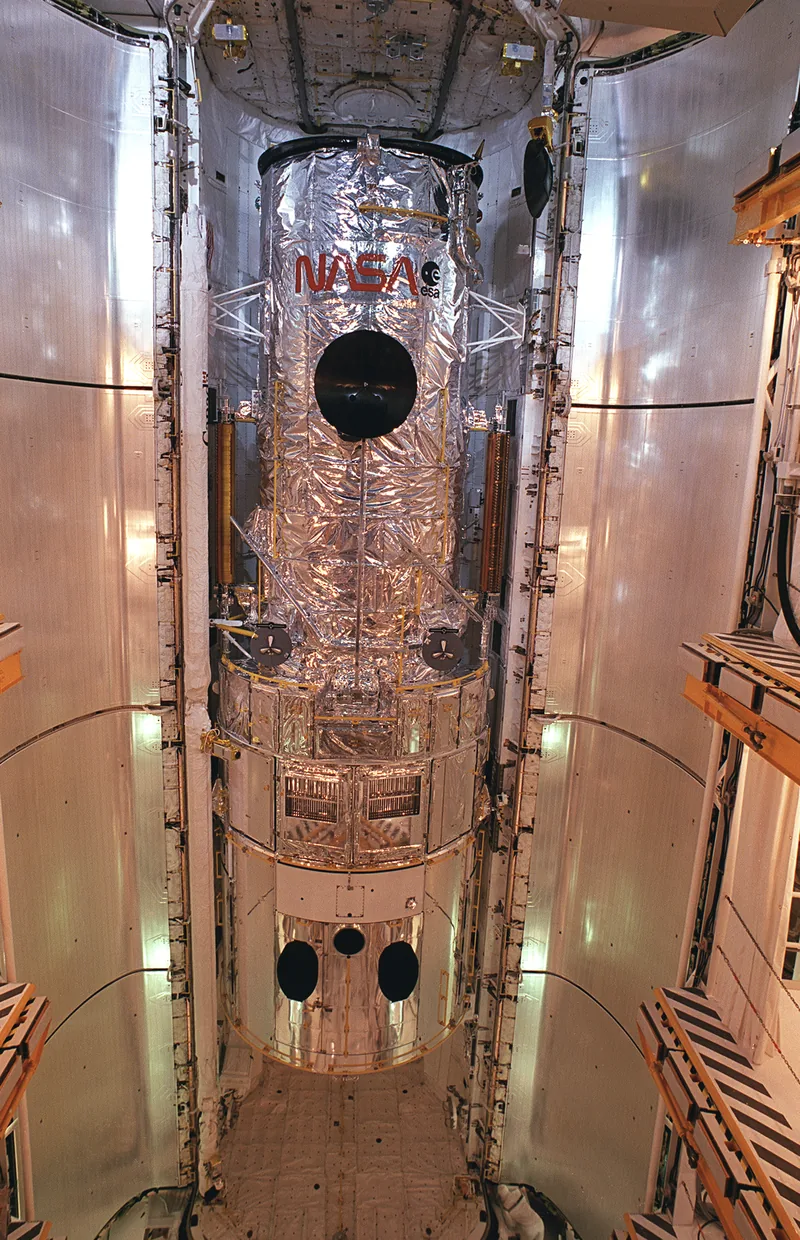
Four official heights
The observatory page: “roughly 300 miles (483 km).” A deployment photograph: “332 nautical miles above Earth.” A facts box: “380-statute-mile orbit.” The Webb fact sheet, of Hubble: “560 kilometers above the Earth.” They are not combined here.[source][source][source]
Fifteen orbits a day
Hubble “completes 15 orbits per day, circling Earth approximately once every 95 minutes,” and moves at “about five miles (8 km) per second, fast enough to travel across the United States in about 10 minutes.”[source]
The People’s Telescope, and 1.7 million observations
A 35th-anniversary facts box nicknames Hubble “The People's Telescope” and lists “Observations 1.7 million.” Other official sentences write “over 1.7 million” and “more than 1.7 million.” The wordings stay as written.[source][source]
Lyman Spitzer, in his late 70s, at the launch
When Discovery carried Hubble into space, the deployment page says, it took “the hopes of generations of astronomers, including those of Lyman S. Spitzer.” Then in his late 70s, “Spitzer was at Kennedy Space Center in Florida to watch his life’s work begin its journey of discovery.”[source]
Thirty-two astronauts, five visits
Hubble “has more than doubled its original lifespan thanks to the 32 astronauts who deployed and serviced the observatory.” It was serviced five times between 1993 and 2009. They replaced batteries, gyroscopes, solar cells and electronic boxes, and installed new cameras and instruments.[source]
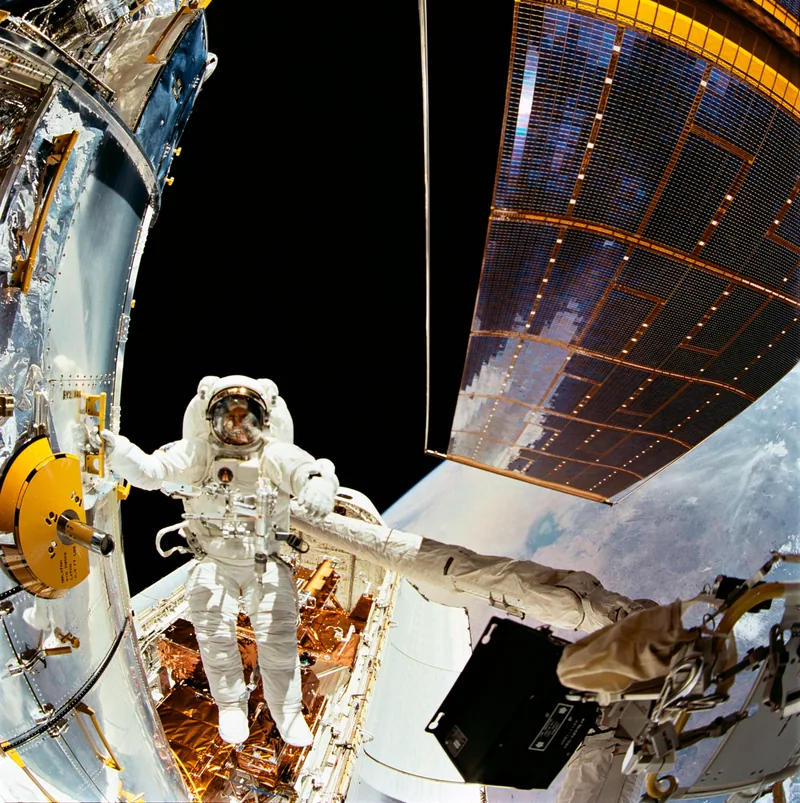
A solar array, and Australia below
On 6 December 1993, during the first servicing mission, NASA photographed Kathryn Thornton and Tom Akers removing a Hubble solar array, with Australia in the background. The original arrays, official pages say, were roller blinds, later upgraded on Servicing Missions 1 and 3B.[source]
Christmas morning, 7:20
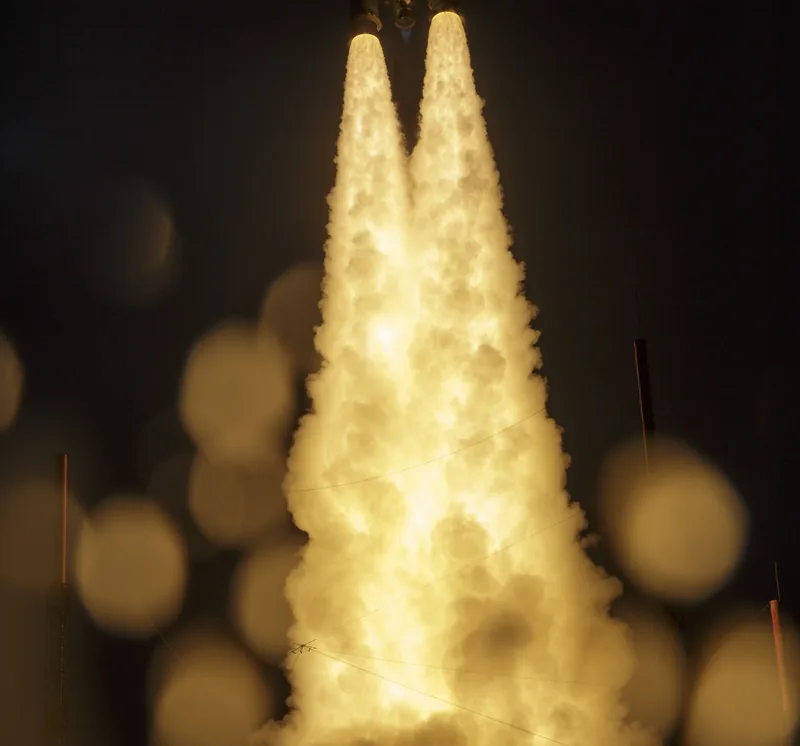
Webb launched on 25 December 2021. The fact sheet writes 07:20am EST (12:20 GMT/UTC) and “Ariane 5 ECA.” The launch page writes 7:20 AM ET (12:20 UTC) and “ArianeSpace.” The FAQs write 7:20 AM (12:20 UTC) and “Arianespace Ariane 5 ECA.” Official times and spellings are left unblended.[source][source][source]
Origami, then a Transformer
The fact sheet says Webb was “so big it had to fold origami-style to fit in the rocket and unfolded like a “Transformer” in space.”[source]
A golf-ball of gold
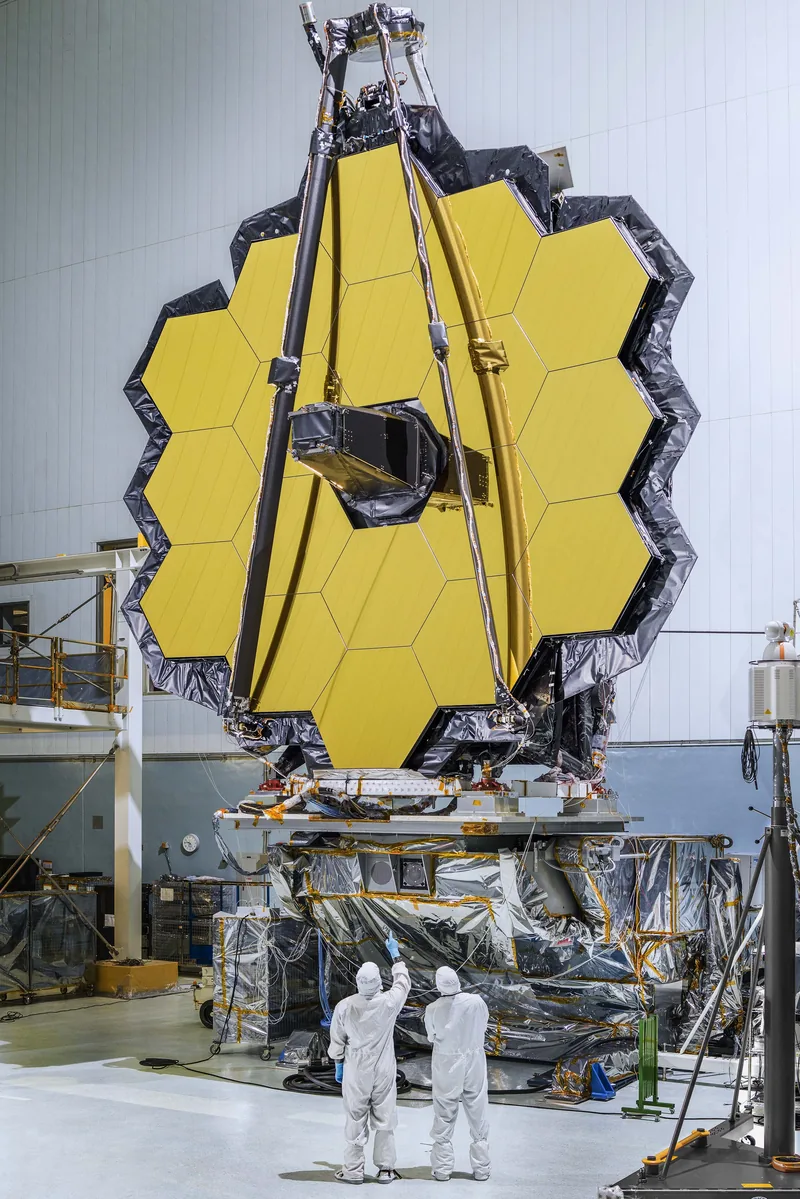
The gold coating is calculated at 48.25 grams, “about equal to the mass of a golf ball.” A golf ball, the same sentence adds, has a mass of 45.9 grams. “Note mass does not equal size!”[source]
Eighteen segments, 6.5 metres, 131.4 metres of focal length
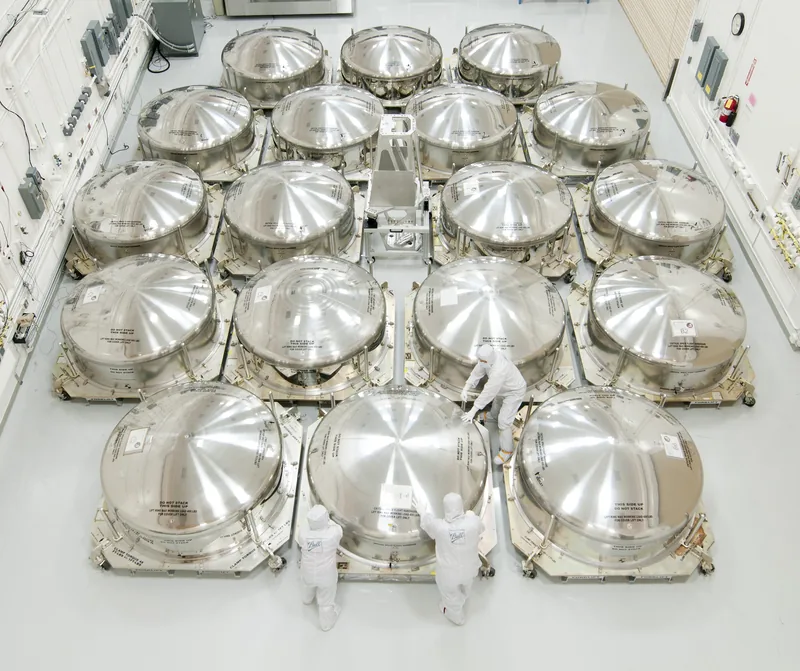
The fact sheet gives a primary “6.5 m (21.3 ft) approximately,” 18 beryllium segments coated with gold, a 25 m² clear aperture, a 705 kg primary, 20.1 kg for a single beryllium mirror and 39.48 kg for a full segment assembly, and a focal length of 131.4 metres.[source]
SPF one million
A five-layer sunshield protects Webb “like having sun protection of SPF 1 million.” It measures 21.197 m by 14.162 m. Operating temperature is “under 50 K (-370 °F).” Mission duration on that sheet is written “5 - 10 years.”[source]
A 29-day, million-mile journey
The launch page says the telescope deployed on its “29-day, million-mile journey” to L2. The fact sheet writes “1.5 million km from Earth orbiting the L2 Point.” The FAQs say all major deployments were completed on 8 January 2022, and that Webb does not sit precisely at L2 but slowly rotates around it twice a year.[source][source][source]
A long look at Fornax
The Hubble Ultra Deep Field was observed from 3 September 2003 to 16 January 2004, in Fornax. The eXtreme Deep Field was released on 25 September 2012. They are Hubble fields, not Webb’s.
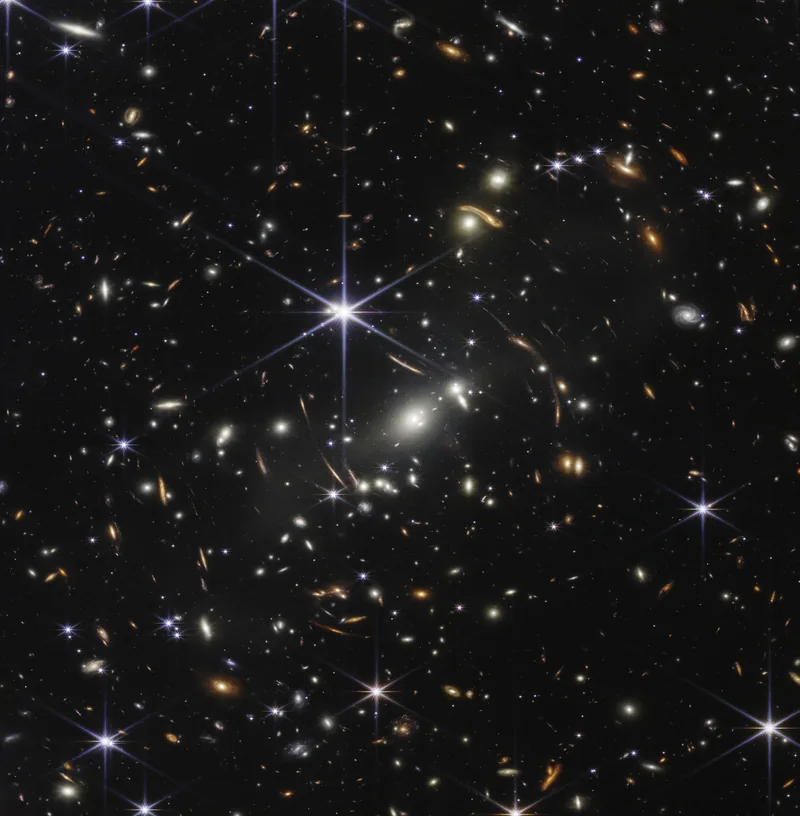
Webb’s First Deep Field
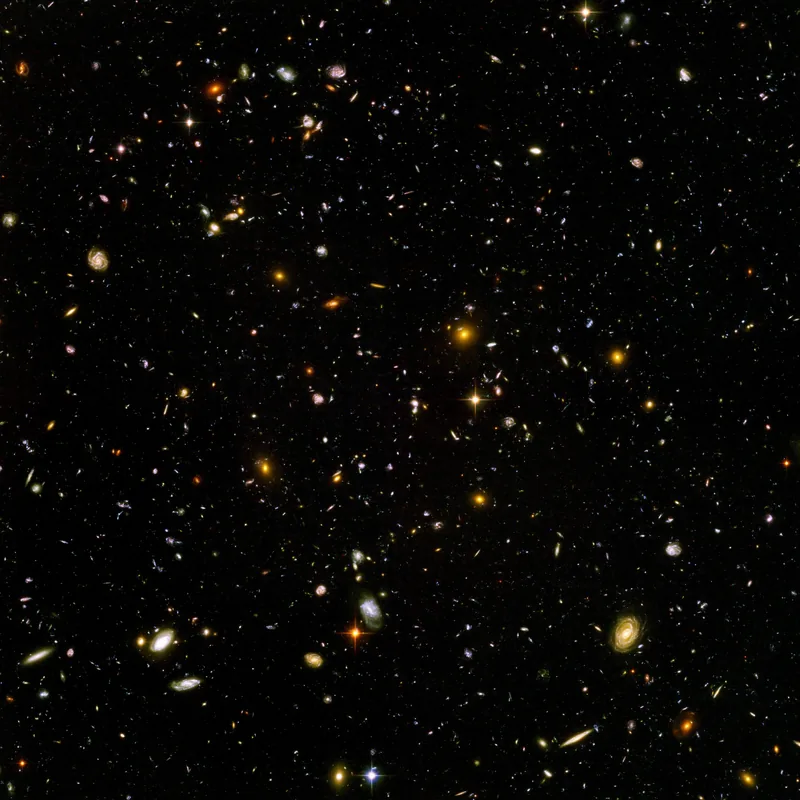
Webb’s First Deep Field shows the galaxy cluster SMACS 0723, with background galaxies stretched into arcs by the cluster’s gravity. Credit: NASA, ESA, CSA and the Space Telescope Science Institute.
Enjoyed this space-telescope desk?
No pop-ups. No intrusive advertising. Just interesting stuff. A little support helps the next galaxies.im site get built.