Deep fields
A long look at almost nothing
Point a space telescope at a patch of sky that looks empty, and wait. The emptiness fills with galaxies. Official deep fields are not a single picture, and not a single year.
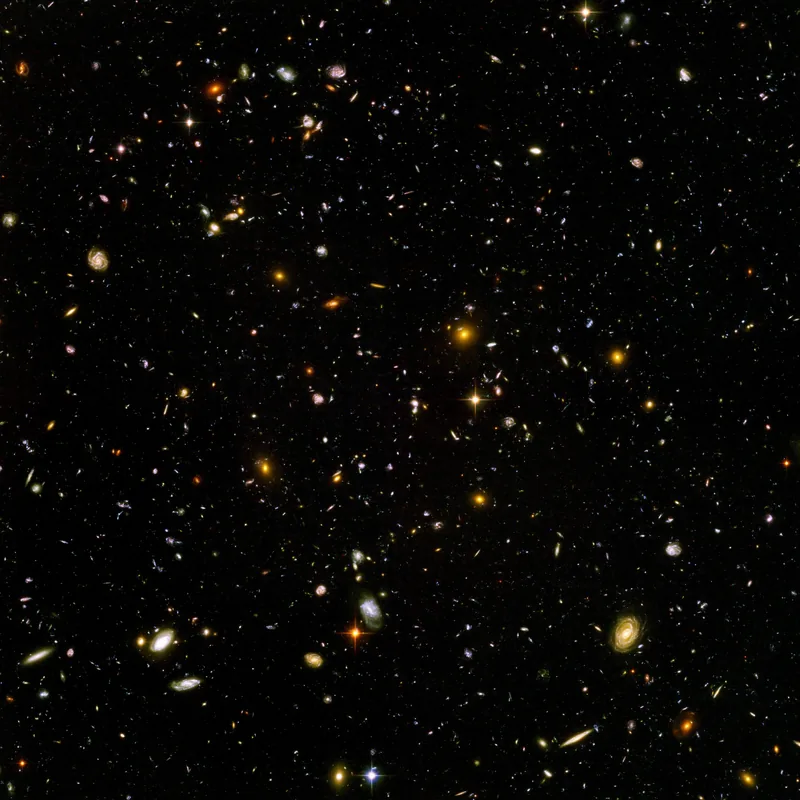
The Hubble Ultra Deep Field, in the constellation Fornax, was gathered between 3 September 2003 and 16 January 2004. The photograph on this page is the NASA and ESA still of that field. It is a long exposure of a small piece of sky, not a map of the whole universe, and it is not Webb’s later deep field.
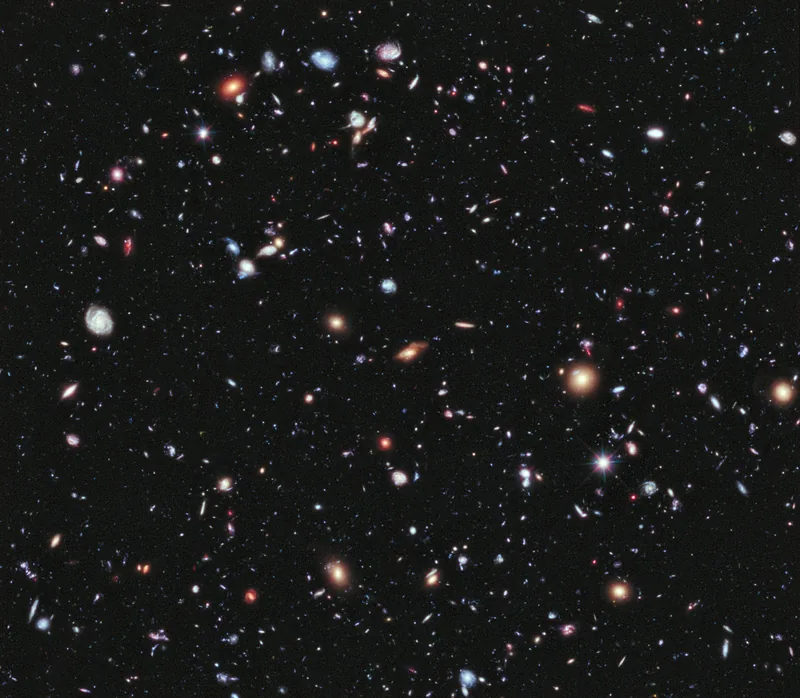
Years later, NASA released the Hubble eXtreme Deep Field. The still on this page comes from a Goddard release dated 25 September 2012. It is a still later, still deeper look with Hubble, not a replacement caption for the Ultra Deep Field, and not a Webb image.
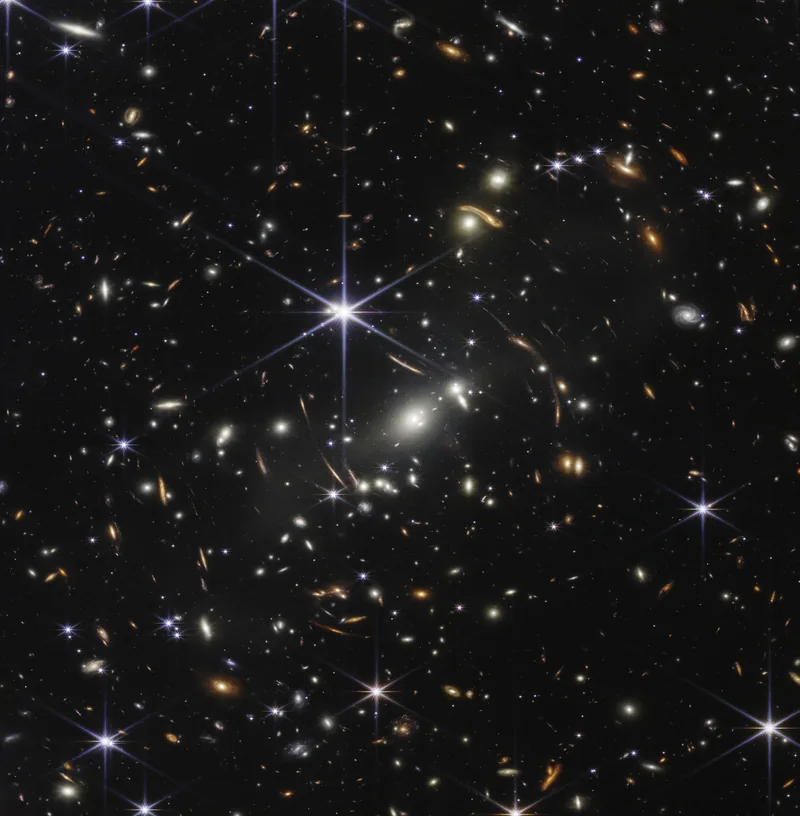
Webb has a first deep field of its own. “Webb’s First Deep Field” is a view of the galaxy cluster SMACS 0723, released by NASA, ESA, the Canadian Space Agency and the Space Telescope Science Institute. In the photograph, some background galaxies are stretched into thin arcs by the cluster’s gravity — the same kind of lensing described on official dark-matter pages, and on this network’s dark-matter desk.
The fact sheet says Webb’s longer wavelengths “enable Webb to look much closer to the beginning of time and to hunt for the unobserved formation of the first galaxies.”[source] A key-facts line on the same sheet says its sensitivity allows it “to peer back in time over 13.5 billion years to see the first galaxies born after the Big Bang.”[source] Those are official aims and official wording, not a claim that any one photograph is a picture of the first galaxy.
Enjoyed this space-telescope desk?
No pop-ups. No intrusive advertising. Just interesting stuff. A little support helps the next galaxies.im site get built.