space-telescopes.galaxies.im
Launched on the 24th. Opened on the 25th.
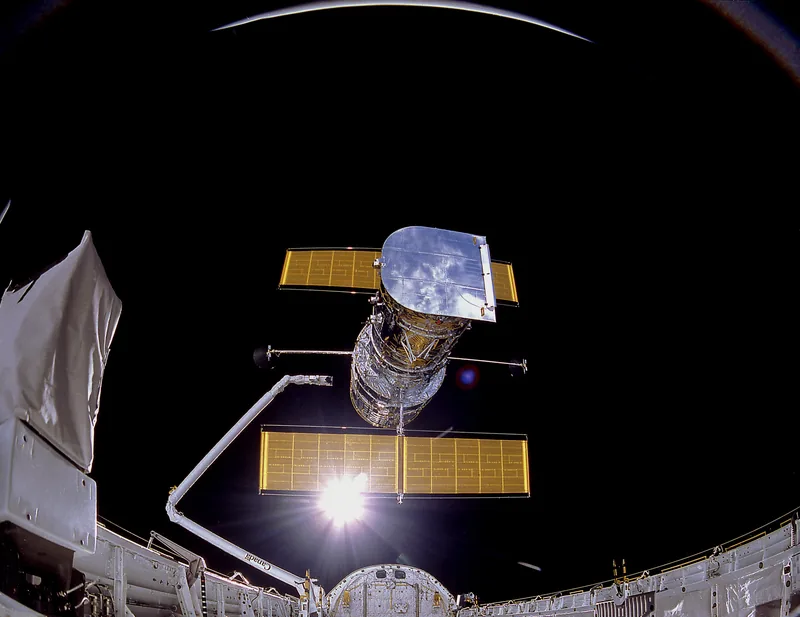
NASA’s observatory page says the Hubble Space Telescope was launched on 24 April 1990, aboard the space shuttle Discovery. The official launch time, on the deployment page, was 8:33:51 a.m. EDT. The next day, 25 April, Discovery’s crew deployed it. Two days, kept a day apart.
A desk of two telescopes
Pick a story. Hubble’s launch and deployment are kept a day apart. Webb’s gold coating is given as a mass, not a size. Official heights are left as each page wrote them.
Above Earth’s air, Hubble’s nearly 8 foot (2.4 metre) primary mirror has a view the observatory page calls pristine. It completes 15 orbits a day, once every 95 minutes, at about five miles (8 km) a second — “fast enough to travel across the United States in about 10 minutes.”
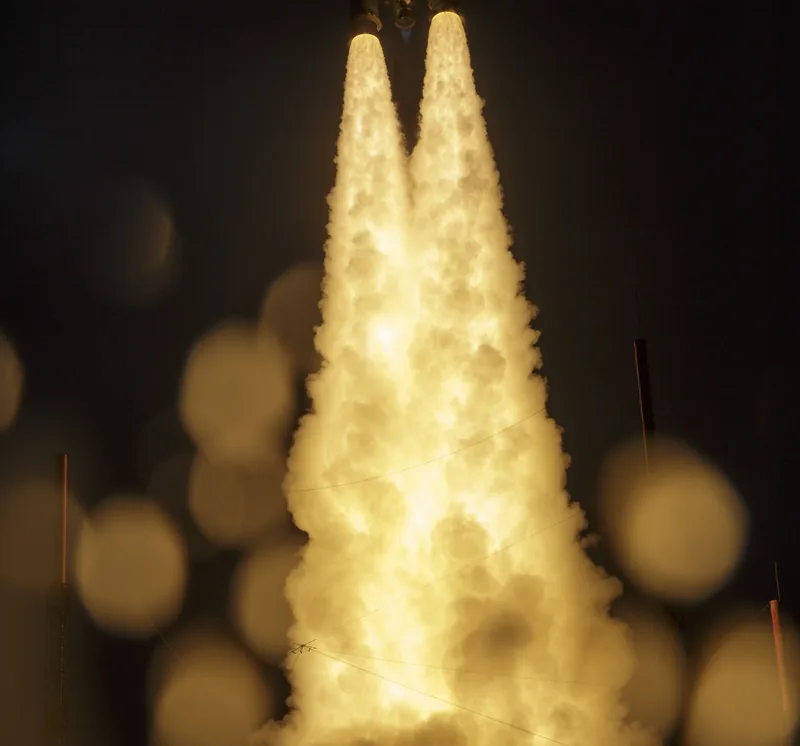
Thirty-one years later, another telescope left the ground on Christmas morning. Official pages write the time slightly differently — 07:20am EST, or 7:20 AM ET, always 12:20 UTC — but they agree on the date: 25 December 2021. An Ariane 5 rose from Europe’s Spaceport near Kourou, French Guiana, with the James Webb Space Telescope folded inside. The fact sheet says it had to fold “origami-style” to fit, and unfolded “like a Transformer” in space.
Webb’s 18 gold hexagons carry, the same sheet calculates, 48.25 grams of gold — “about equal to the mass of a golf ball.” A golf ball, it adds, has a mass of 45.9 grams. “Note mass does not equal size!”
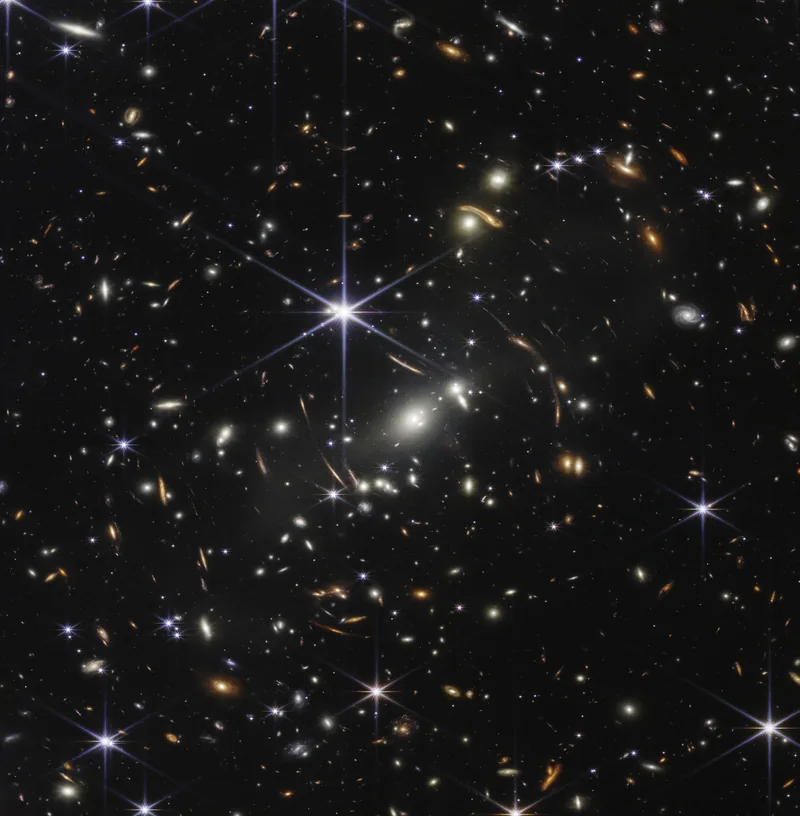
This site is a desk of those official stories: two telescopes, the days they left Earth, the heights and distances written for them, the people who went outside to keep Hubble working, and the long looks that became deep fields.
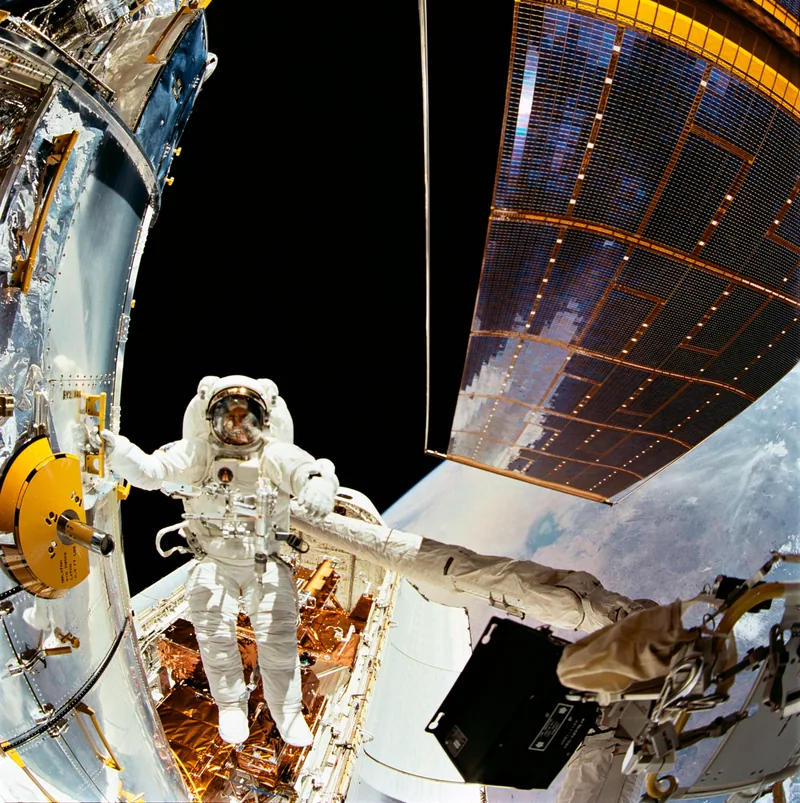
Hubble, NASA says, has more than doubled its original lifespan thanks to the 32 astronauts who deployed and serviced it, five times between 1993 and 2009. Webb cannot be visited that way. After launch it travelled what the launch page calls a “29-day, million-mile journey” to the second Lagrange point, and the FAQs say all major deployments were completed on 8 January 2022.
Enjoyed this space-telescope desk?
No pop-ups. No intrusive advertising. Just interesting stuff. A little support helps the next galaxies.im site get built.